Buying guides · 6 min read · 1,480 words
How to Choose a Personalized Gift (Without Getting It Wrong)
Personalization is not just adding a name. A short guide to picking a gift that reads as thoughtful rather than as merchandise.

A name printed on a mass-produced object is not really a personalized gift. It is a mass-produced object with a name on it, and most people can tell the difference immediately.
The gifts that land are the ones where the personal detail is the point of the object, not a sticker applied at the end. Here is how to get there.
1. Start with a fact, not a product
Before you look at anything to buy, write down three facts about the person or the relationship. A date. A place. A sentence they say constantly. A photo you both keep going back to.
Then find an object that can carry one of those facts. This order matters - people who start with the product end up engraving a generic quote, because the object arrived before the meaning did.
2. One detail beats four
A plaque with two names, a date, a quote, coordinates and a photo looks like a form that was filled in. A plaque with one date on it looks deliberate.
If you are torn between details, pick the one that would confuse a stranger and mean everything to the recipient. That is usually the right one.
3. Decide whether it is for display or for use
Display gifts - plaques, frames, signs - are seen daily but never handled. Use gifts - boxes, mugs, keychains - are handled daily but often out of sight.
- For someone sentimental and house-proud, display wins.
- For someone practical who finds ornaments cluttering, use wins.
- For a couple setting up a home, a display piece with their names doubles as decor they have not had to buy.
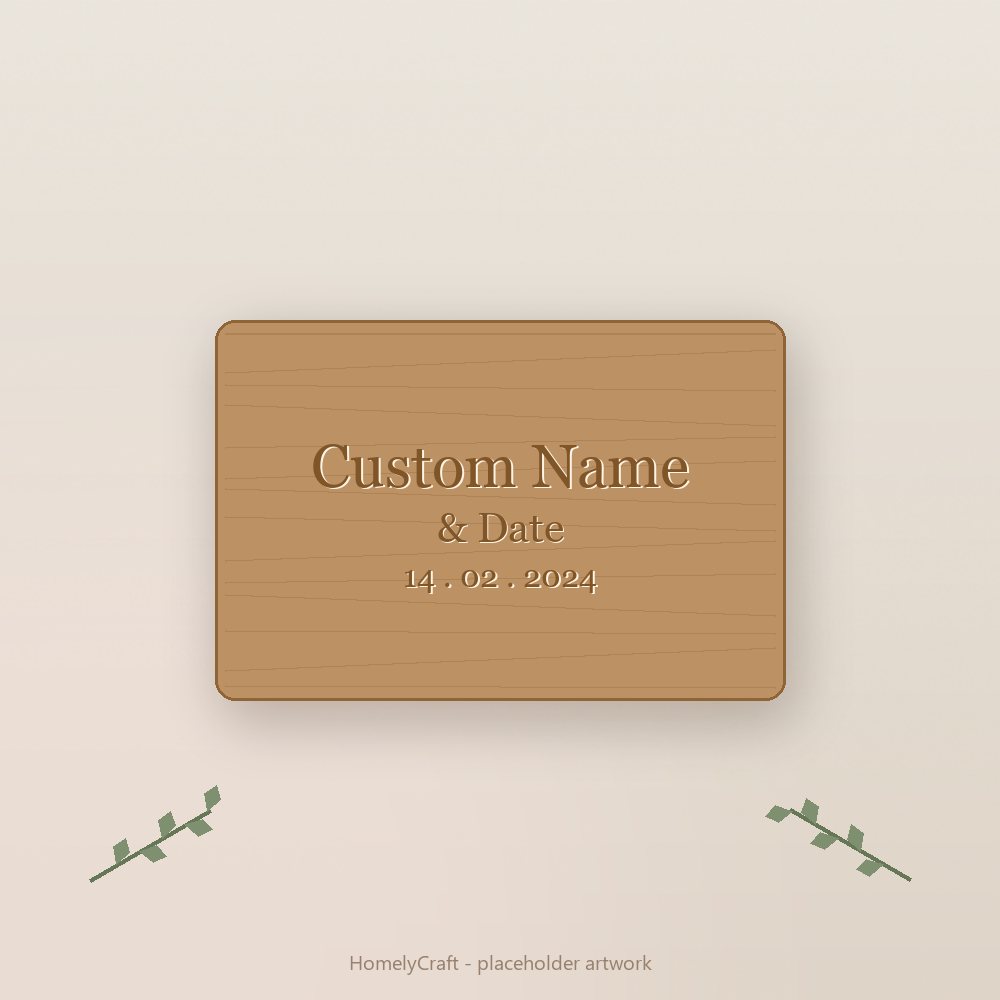
Personalized Gifts
Custom Name & Date Wooden Plaque
Two names, one date, engraved deep into wood and finished by hand.
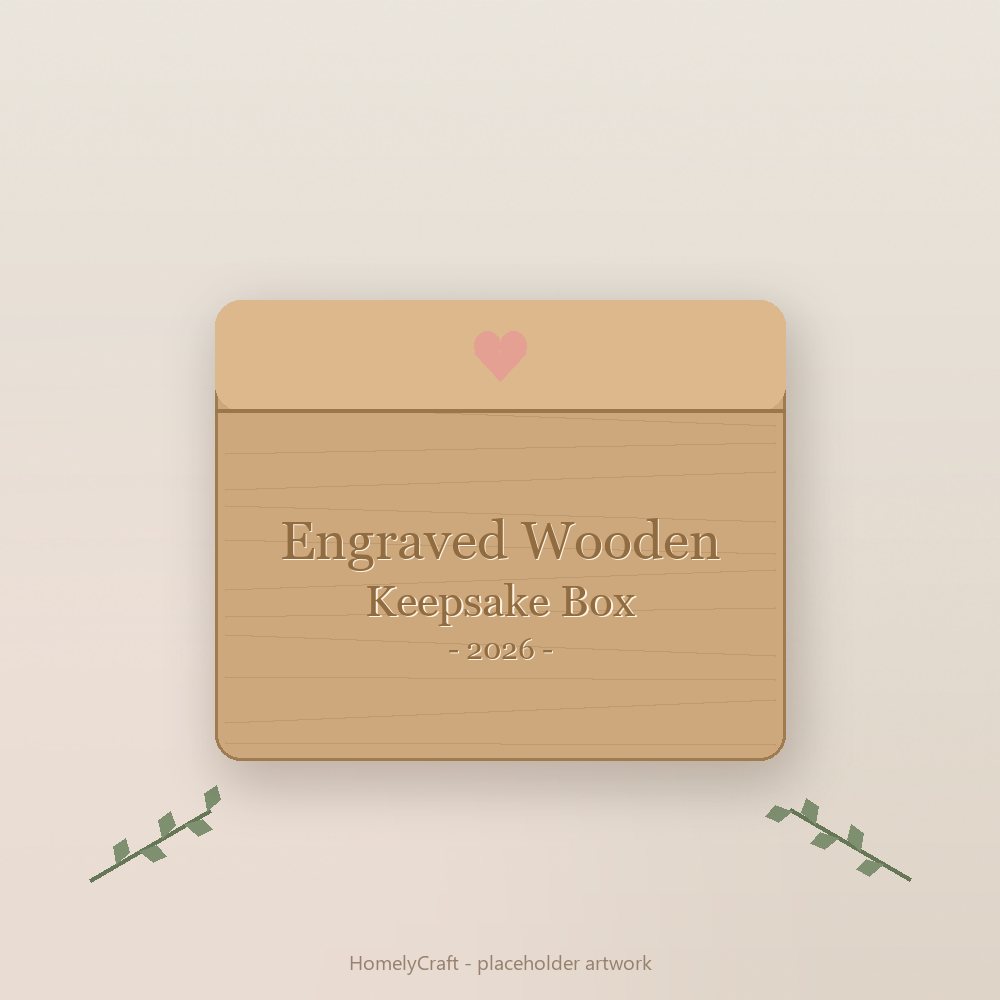
Personalized Gifts
Engraved Wooden Keepsake Box
A lidded wooden box engraved with a name and a message, lined and finished by hand.
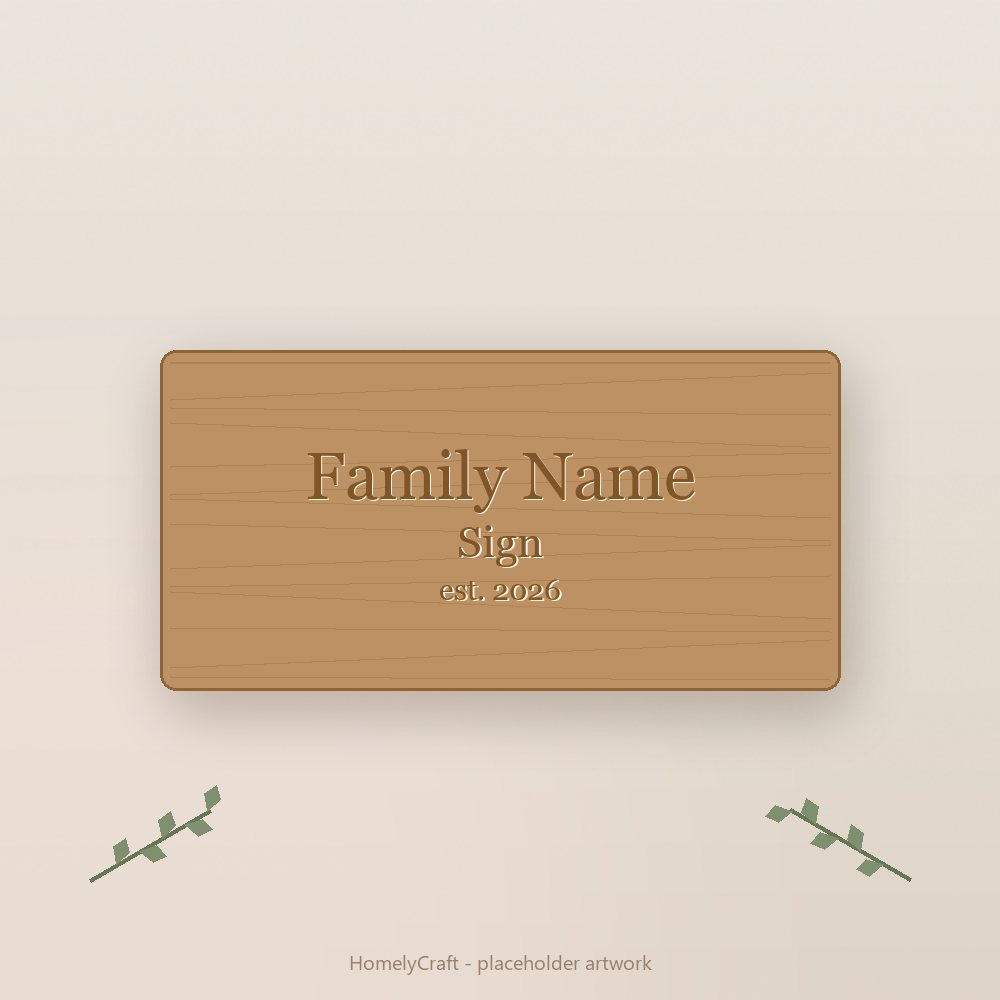
Family Gifts
Family Name Sign
The family name, engraved large, with the year the household started.
4. Check the lead time before you fall in love with an idea
Handmade personalization takes days, not hours. Engraving, finishing and drying each take their own time, and anything involving a printed photo adds a step.
As a rule: allow a week for a simple engraved piece, two weeks for anything with a photo or multiple pieces, and three weeks in December, early February and wedding season, when every workshop in the country is behind.
5. Spell-check the engraving twice
This sounds obvious and it is the single most common problem in custom orders. An engraving cannot be undone, and a name spelled the wrong way turns a keepsake into an awkward object.
Ask the maker for a layout preview before they cut. Any workshop that will not send one is guessing at spacing on your behalf.
6. Match the finish to the person, not the occasion
Occasion-themed finishes date badly. A gift covered in hearts is a Valentine's gift forever; the same piece in plain walnut is just theirs.
If you want the occasion recorded, put it in the engraving - a date does that quietly and permanently.
7. Write the card yourself
A handmade gift with a printed stock verse undoes half the work. Three plain sentences in your own words are worth more than a professionally written paragraph, and the card is usually what gets kept inside the box afterwards.
A quick checklist
- One meaningful detail, chosen before the product.
- Display or use - pick deliberately.
- Order with a week to spare, more in peak season.
- Approve a layout preview before it is cut.
- Neutral finish, specific engraving.
- Card written by you.
A five-minute method when you have no idea what to buy
Set a timer and answer four questions in writing. Who is it for, and what is one fact about them nobody else would think to use? What is the occasion, and does it have a date attached? Will they display things or use things? And when does it have to arrive?
Those four answers eliminate roughly ninety per cent of a gift catalogue, which is why the exercise is worth five minutes. Most bad gifts are bought by people browsing without having answered any of them.
Personalization is not the same as customization
The words get used interchangeably and they are not the same thing. Customization is choosing between options a maker already offers: the size, the wood, the finish. Personalization is adding something that did not exist until you supplied it: a name, a date, a photograph, a line of your own.
A gift can be heavily customized and completely impersonal. The reverse is also true - a plain object with one engraved date can be the most personal thing in the room. If you only have budget or time for one, choose personalization.
How much text actually fits
This is where most first-time buyers are surprised. Engraving has a minimum legible size, so the amount of text you can fit is governed by the physical dimensions of the piece, not by the character limit in the form.
- A small plaque or keychain: one name, or a name and a short date.
- A standard plaque or box lid: two names, a date and one line of up to around 60 characters.
- A large sign or board: a family name, a year and a line of children's names along the base.
- Handwriting: a recipe card or a note engraves beautifully, but it needs the larger sizes to stay readable.
If your text is longer than the piece can carry at a legible size, we will tell you before cutting and suggest either a larger piece or a shorter line. We will not silently shrink it to a size nobody can read.
Choosing for people you do not know well
Colleagues, new in-laws, a friend's partner. The instinct is to go generic, which produces exactly the gift that gets re-gifted. The better move is to personalize something neutral: an initial, a desk piece, a photo block from a group photograph. You are marking that this is theirs without claiming to know their inner life.
Birthday Gifts
Custom Initial Desk Piece
A single engraved initial in solid wood - a small gift that is unmistakably theirs.
Personalized Gifts
Engraved Photo Block
A solid block with your photo on the face and your words on the side.
Personalized Gifts
Personalized Desk Organiser
Pen tray, phone stand and a name engraved across the front.
Choosing for someone who is grieving
Personalized gifts do more work here than almost anywhere else, and they are also the easiest to get wrong. Keep it plain. A name, the years, and one line. Avoid anything decorative, anything that instructs the recipient how to feel, and anything that arrives in bright packaging.
Two things we have learned from making these: send it a few weeks after the event rather than in the first week, when the house is full of flowers; and ask before engraving a nickname, because families do not always agree on which one belongs on an object that will outlive them.
Materials, and how they age
Wood moves, darkens in sunlight and can be re-sanded if it is marked. Acrylic is crisp and modern but scratches. Ceramic survives daily use but cannot carry much text. Glass frames protect a print for decades but are a shipping risk internationally.
For a gift meant to last, wood is the forgiving option: it is the only one of those materials that can be repaired at home with fine paper and a little oil.
Budget: where the money actually goes
In handmade work you are buying time, not materials. A £69 plaque and a £159 gift box use similar amounts of wood; what differs is the number of components, the number of separate engraving setups and the number of drying stages between them.
That is worth knowing because it tells you where to spend. Adding a second engraved item to a gift costs much more than making the first item larger. If your budget is tight, buy one bigger piece rather than two small ones.
Lead times, and how to talk to a maker about a deadline
Say the date first, before the product. Any workshop worth ordering from will tell you honestly whether it can be met, and a good one will turn the order away rather than miss it. Beware of anyone promising same-day handmade personalization: that is stock with a sticker.
As a rule of thumb, allow a week for a simple engraved piece, two weeks for photo work or a multi-piece box, and three weeks in December, early February and peak wedding season.
The proof stage - do not skip it
Ask for a layout preview and read it slowly, out loud if you can. Check the spelling of every name against something written down, not from memory. Check the date format: 03/04 means two different days depending on which side of the Atlantic you are on. Check that the apostrophe is where you meant it.
Approving a preview with a mistake in it is the one problem a workshop cannot absorb, because the piece has to be made twice. Two minutes of reading prevents it.
A checklist you can copy
- One meaningful detail, chosen before the product.
- Display or use - decide deliberately.
- Check the text fits the piece at a legible size.
- Tell the maker your deadline before you pay.
- Read the layout preview against written spellings.
- Neutral finish, specific engraving.
- Write the card yourself, in your own words.
Questions about buying guides
What makes a personalized gift feel thoughtful rather than generic?
One specific detail that could only apply to the recipient - a date, a place, a phrase they use - rather than a name added to a mass-produced object.
How long does personalization take?
At HomelyCraft, 3-5 working days for engraved pieces and 5-7 for photo work or multi-item gift boxes, plus delivery. Anyone promising handmade personalization in hours is selling stock.
How much text can be engraved?
Names up to about 30 characters a line and messages up to around 120, though the real limit is the size of the piece. We send a layout preview at actual size before anything is cut.
Can personalized gifts be returned?
Not for change of mind - they cannot be resold. If a piece arrives damaged or does not match the layout you approved, it is remade or refunded in full.
How does personalization work at HomelyCraft?
You choose a piece and send the names, dates and message. HomelyCraft emails a layout preview at the real size of the piece, makes changes free, and only engraves once you approve it.
More from the gift journal
- Wedding Gift Etiquette: How Much to Spend and What to Actually GiveWhat guests in the US and UK actually spend, when cash is the right answer, and how to give something that is still in the house in ten years.
- HomelyCraft Prices: What a Handmade Personalized Gift CostsThe whole range runs from £39 to £159, with most pieces between £75 and £100. What sits inside that price, what pushes it up, what is never charged extra, and how to set a budget before you browse.
- Gifts for Someone Who Says They Do Not Want AnythingThey mean it, usually. Here is how to buy for the person who genuinely does not want more things - and why a dated keepsake is the one exception they keep.
Made by hand, personalized for one person
Everything in these guides is something we make. Send us the names, the date and the message, approve the layout, and we will craft and ship it.
Browse all gifts